ԱՐԵՎԵԼԱԳԻՏՈՒԹՅԱՆ ԻՆՍՏԻՏՈՒՏ
INSTITUTE OF ORIENTAL STUDIES
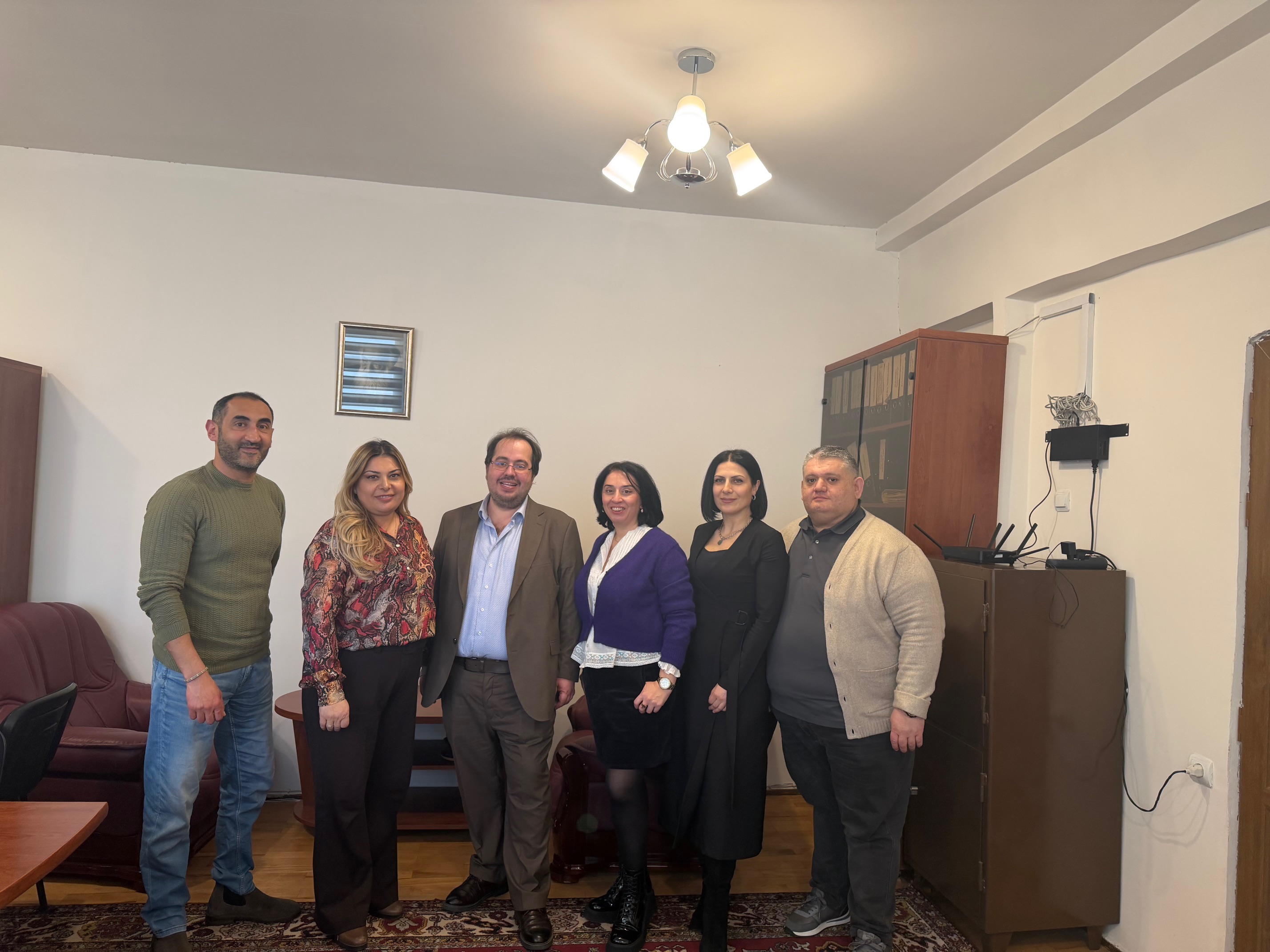
From March 26 to 30, 2026, the Institute of Oriental Studies of the National Academy of Sciences of the Republic of Armenia hosted Vasily Kuznetsov for a working visit aimed at strengthening academic cooperation and advancing joint research initiatives between the two institutions.
During the visit, the Director of the Institute, Gohar Iskandaryan, welcomed Dr. Kuznetsov and highlighted the importance of the growing partnership between the Institute of Oriental Studies of the NAS RA and the Institute of Oriental Studies of the Russian Academy of Sciences. Particular emphasis was placed on the cooperation agreement signed in November 2025, which has opened new opportunities for collaborative scientific engagement, expert dialogue, and the implementation of joint academic projects.
The visit took place within the framework of the scientific grant project “Security Issues of Arab Countries in North Africa in the Context of Regional Conflicts” (25RG-6A154), in which Dr. Kuznetsov participates as an international research partner. As part of the program, he held a series of meetings and working discussions at the Department of Arab Countries with Senior Researcher Aram Gasparyan and members of the research team. The discussions addressed contemporary security challenges in the Arab countries of North Africa, regional conflict dynamics, and the evolving geopolitical landscape of the Middle East and adjacent regions.
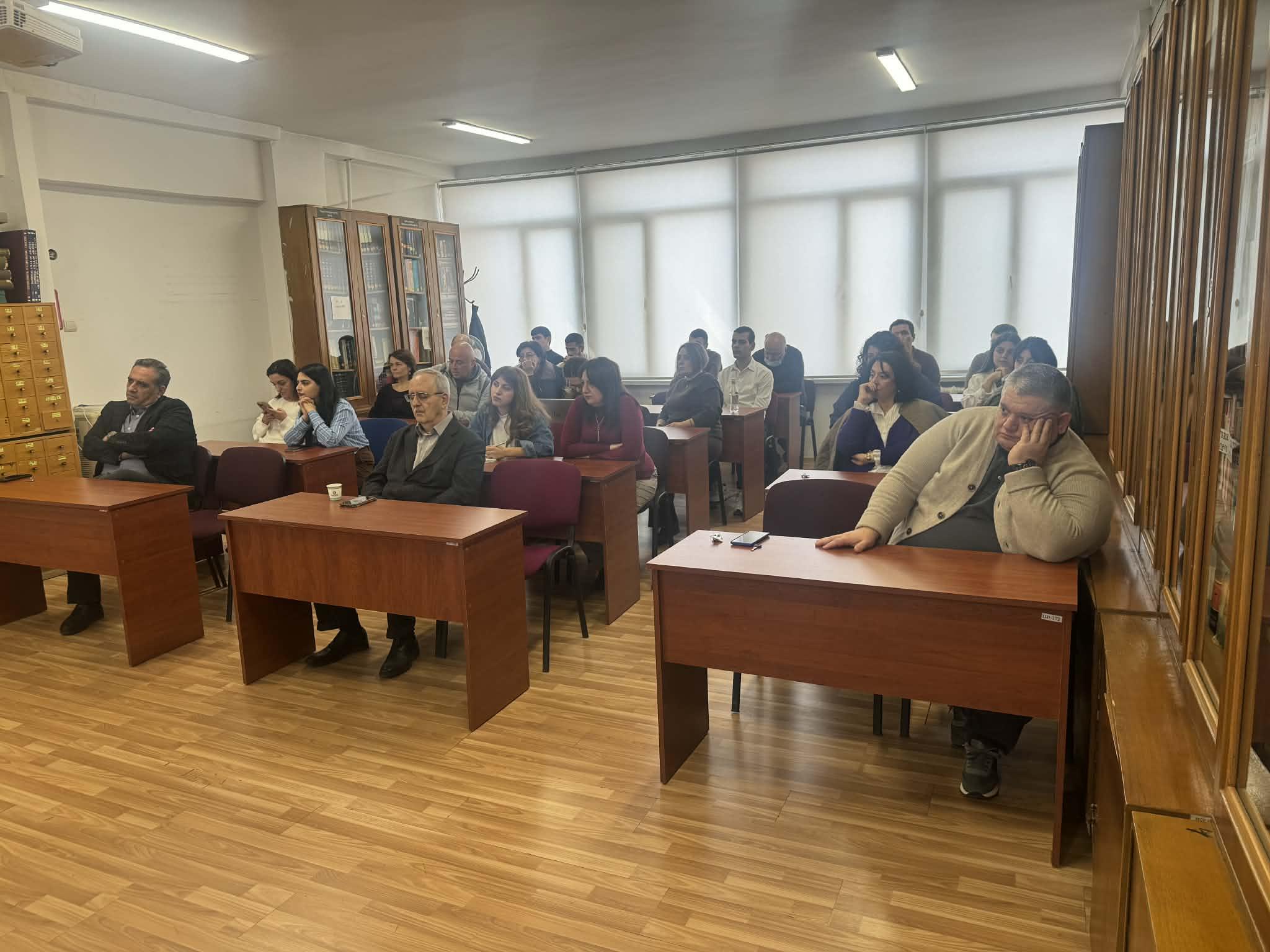
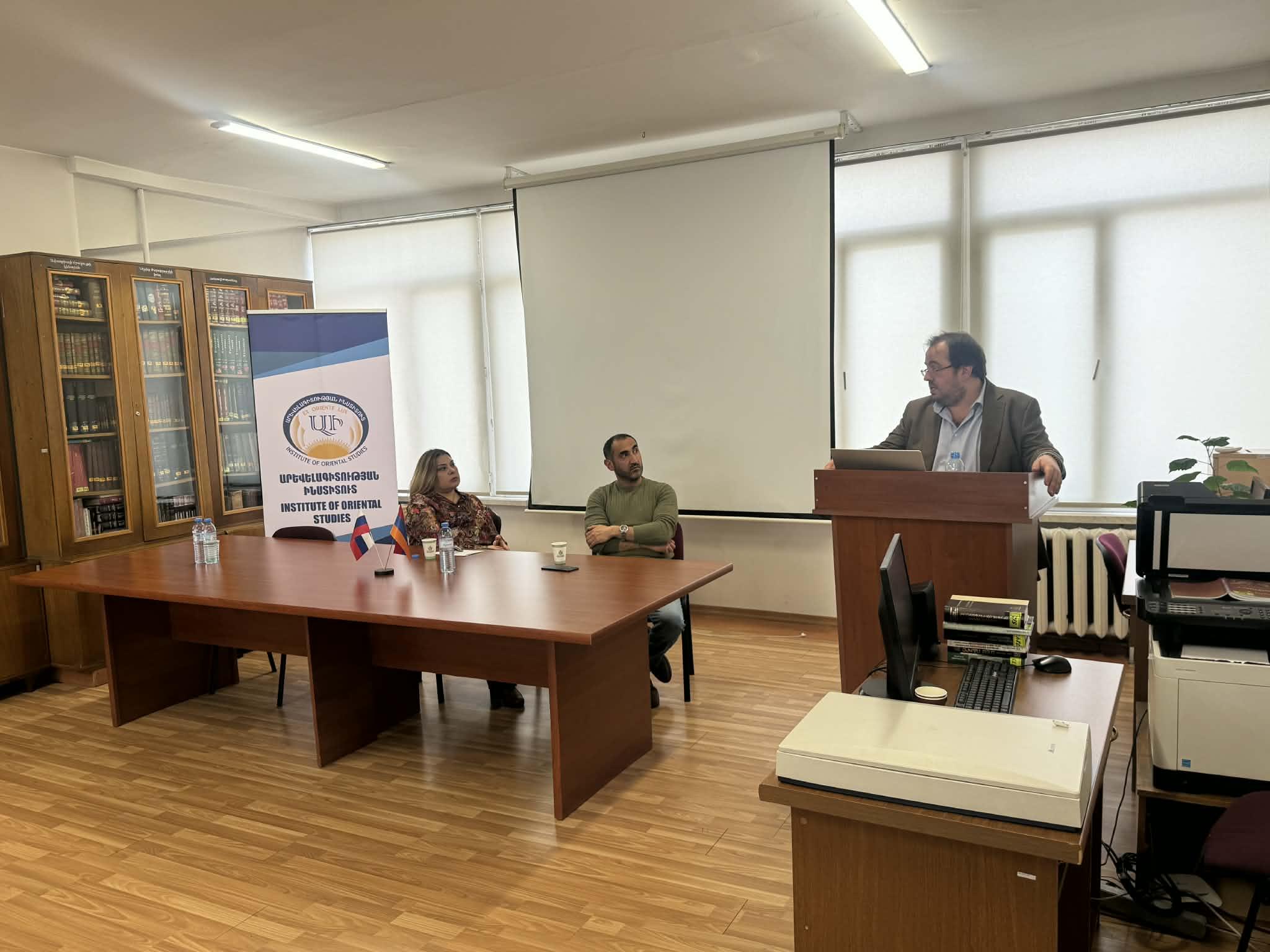
Within the framework of the visit, Dr. Kuznetsov also delivered a lecture entitled “Current Security Challenges of Arab Countries in Asia and Africa under Conditions of Regional Geopolitical Transformations.” The presentation focused on the transformation of regional security architectures, the impact of geopolitical shifts on Arab states, and emerging trends in regional conflicts.
The Institute of Oriental Studies of the National Academy of Sciences of the Republic of Armenia continues to attach great importance to the development of international academic cooperation and the expansion of scholarly networks aimed at promoting high-level research and long-term institutional collaboration.