ԱՐԵՎԵԼԱԳԻՏՈՒԹՅԱՆ ԻՆՍՏԻՏՈՒՏ
INSTITUTE OF ORIENTAL STUDIES
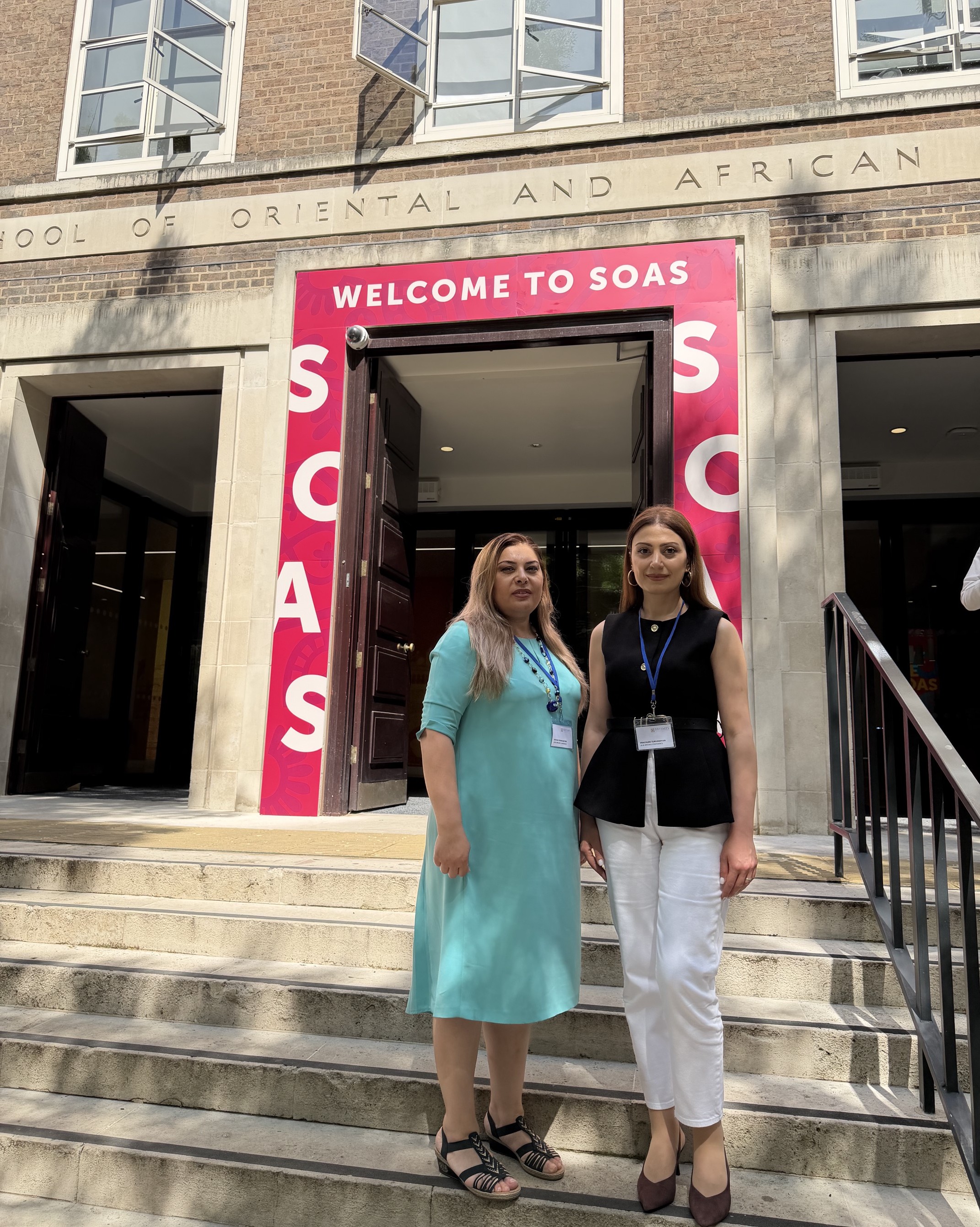
From 23 to 25 June 2026, the British Society for Middle Eastern Studies (BRISMES) held its annual international conference at SOAS University of London (School of Oriental and African Studies). Recognized as the United Kingdom's largest and most prestigious annual gathering of scholars, experts, and researchers in Middle Eastern Studies, the conference brought together leading specialists from around the world.
The Institute of Oriental Studies participated in the conference through its Director, Associate Professor Gohar Iskandaryan, PhD, and Hrachuhi Turvandyan, Junior Researcher at the Department of Arab Countries.
The central theme of BRISMES 2026 was "War, Empire and Sabotage in an Age of Genocide." The conference focused primarily on Palestine and the ongoing humanitarian crisis in Gaza. Participants discussed the contemporary crisis of international law, as well as the geopolitical challenges, imperial influences, and forms of resistance shaping the Middle East and North Africa (MENA) region.
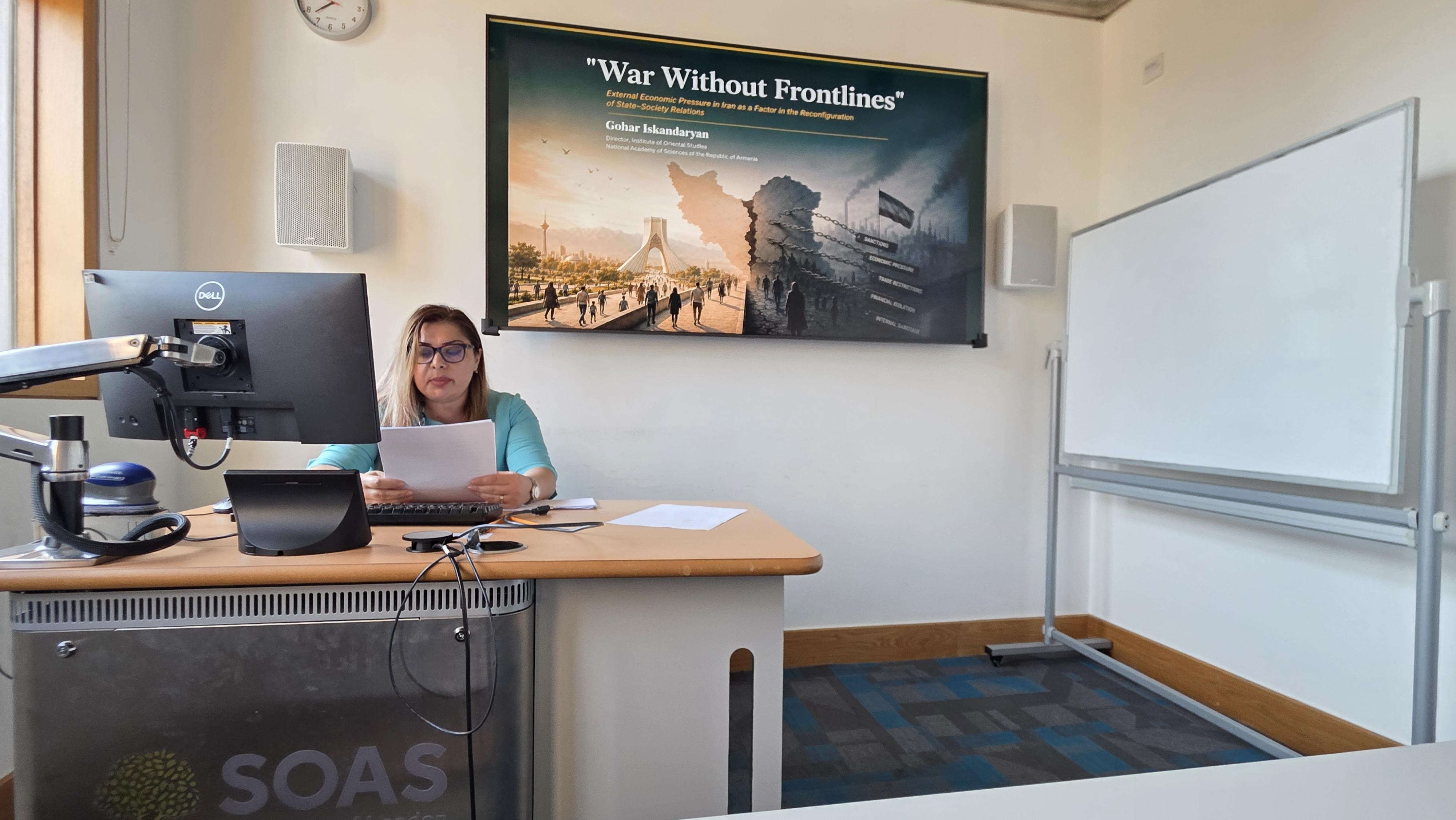
During the conference, Associate Professor Gohar Iskandaryan presented her paper, "War Without Frontlines: External Economic Pressure in Iran as a Factor in the Reconfiguration of State–Society Relations”. Drawing on a monitoring and analysis of Iranian media, as well as political and economic indicators from 2000–2023, the paper examined how economic pressure, sabotage, and information warfare have influenced the dynamics of Iran's domestic politics and the evolving relationship between the state and society.
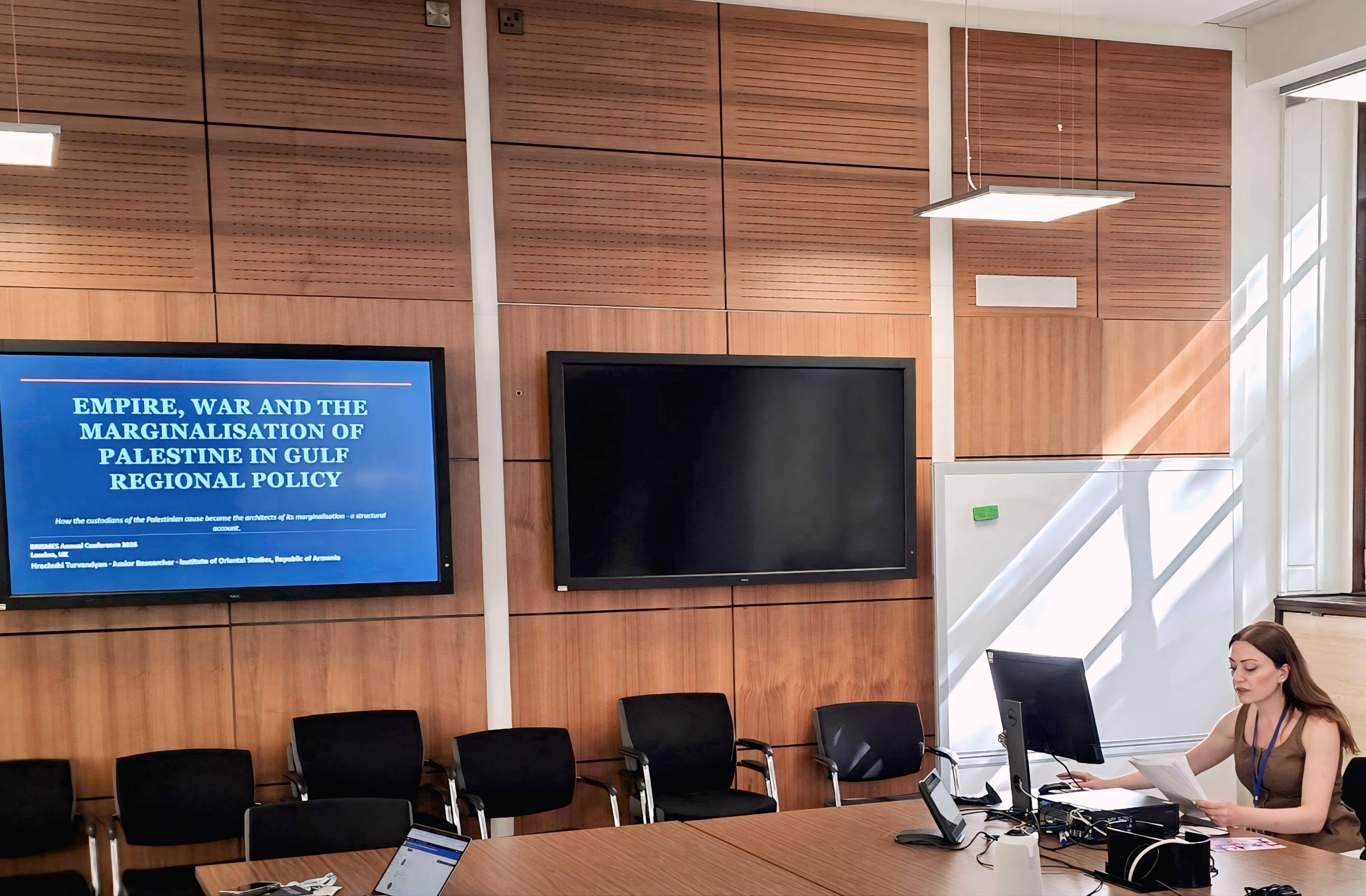
Hrachuhi Turvandyan presented a paper, "Empire, War and the Marginalisation of Palestine in Gulf Regional Policy." Her presentation examined the transformation of the Palestinian issue within the regional policies of the Gulf Arab states during the first quarter of the 21st century. The paper analyzed how imperial dynamics, emerging regional security architectures, and the Abraham Accords have contributed to the marginalization of the Palestinian question within the strategic priorities of Gulf countries. Particular attention was given to the policies adopted by Gulf governments in response to the Gaza crisis, prevailing security narratives, and the depoliticization of humanitarian discourse.
Hrachuhi Turvandyan's participation in the conference was supported by the Higher Education and Science Committee of the Ministry of Education, Science, Culture and Sports of the Republic of Armenia and the Calouste Gulbenkian Foundation.
In addition to presenting their research, the Institute's representatives participated in panel discussions and exchanged views with leading international scholars. Their participation in this prestigious international forum marked an important step toward strengthening cooperation with leading research institutions worldwide and expanding opportunities for future academic collaboration.