ԱՐԵՎԵԼԱԳԻՏՈՒԹՅԱՆ ԻՆՍՏԻՏՈՒՏ
INSTITUTE OF ORIENTAL STUDIES
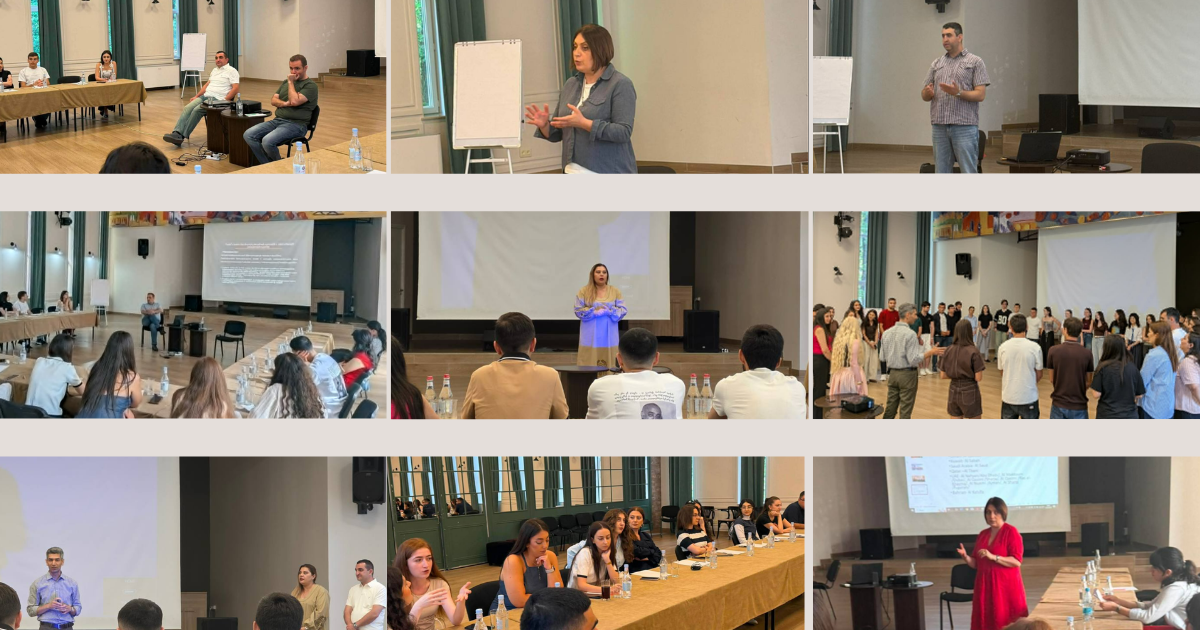
On July 21–23, a three-day summer school titled "Armenia's Foreign Policy and Strategic Communication" was held in Aghveran. The program was organized through the collaboration of the Institute of Oriental Studies, the Faculties of International Relations and Sociology of Yerevan State University, and the International Republican Institute (IRI).
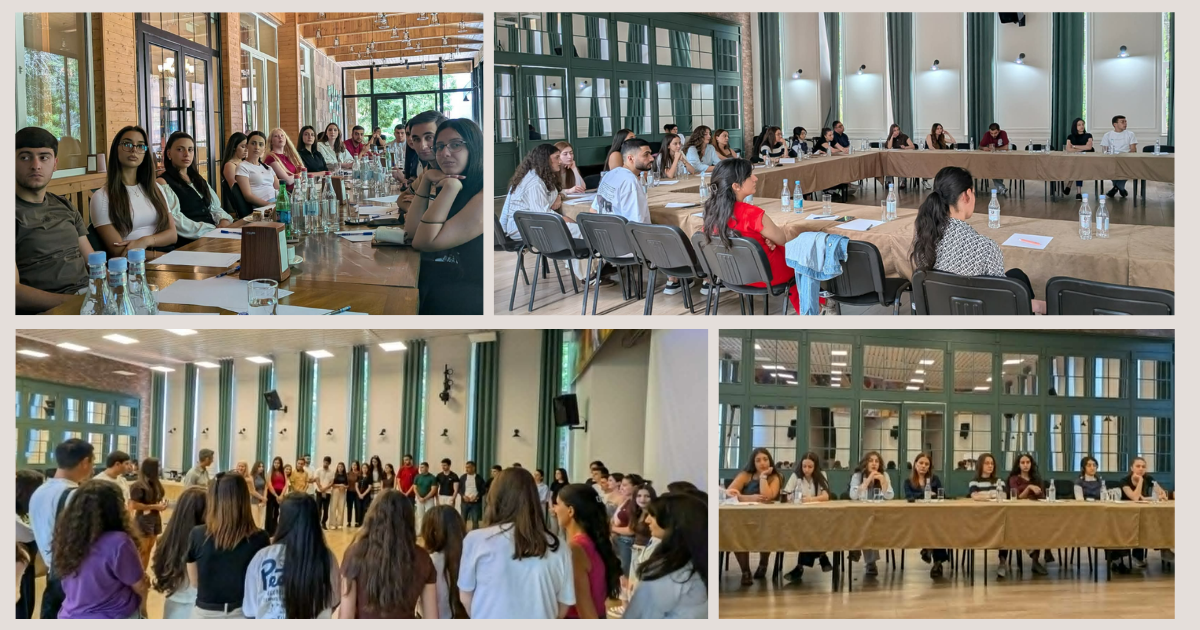
More than 50 students and young researchers participated in the program, representing YSU's Faculties of Oriental Studies, International Relations, History, and Sociology, alongside participants from Khachatur Abovian Armenian State Pedagogical University and the Institute of Oriental Studies.
The summer school aimed to establish a professional educational platform enabling students to deepen their understanding of pressing issues in Armenia's foreign policy, international relations, and strategic communication. The program focused on honing their analytical and practical skills while providing direct engagement with leading experts in the field.
The three-day curriculum comprised lectures and academic discussions structured around three primary thematic pillars:
The first day, centered on the theme "Armenia in the International System," examined the primary vectors and transformation of Armenia's foreign policy, alongside its bilateral relations with Turkey, Azerbaijan, Iran, and the Gulf states. Thematic lectures were delivered by Tigran Yepremyan, Dean of YSU’s Faculty of International Relations, Gor Petrosyan, Vice Dean of the same faculty, Gohar Iskandaryan, Director of the Institute of Oriental Studies, Arax Pashayan, Head of the Department of International Relations, Levon Hovsepyan, Head of the Department of Turkish Studies, and Artyom Tonoyan, Senior Researcher in the Department of Iranian Studies.
The second day addressed core issues in strategic communication. Discussions focused on the dynamics of social consensus-building in modern democracies, mechanisms of Foreign Information Manipulation and Interference (FIMI), and nation branding and international reputation management strategies. Lectures were presented by Nvard Melkonyan, Head of the Master’s Program in Public Relations (PR) at YSU’s Faculty of Sociology,Artak Shaqaryan, Head of the Master’s Program in Strategic Communication at YSU’s Faculty of Sociology, and Anna Naghdalyan, lecturer in the same program.
The concluding day featured a policy dialogue structured as a "World Café," in which participants engaged in small-group deliberations to evaluate challenges and development opportunities across Armenia’s foreign policy, security, and strategic communication domains. Drawing upon the theoretical insights and expert discussions from the preceding sessions, these deliberations culminated in the formulation of actionable policy recommendations.
The three-day educational program provided participants not only with contemporary insights into foreign policy and strategic communication, but also with an opportunity to enhance their critical thinking, analytical capabilities, and collaborative skills. Rigorous discussions and knowledge sharing within a professional academic setting facilitated the expansion of participants' research interests and the establishment of new networks for scholarly collaboration.
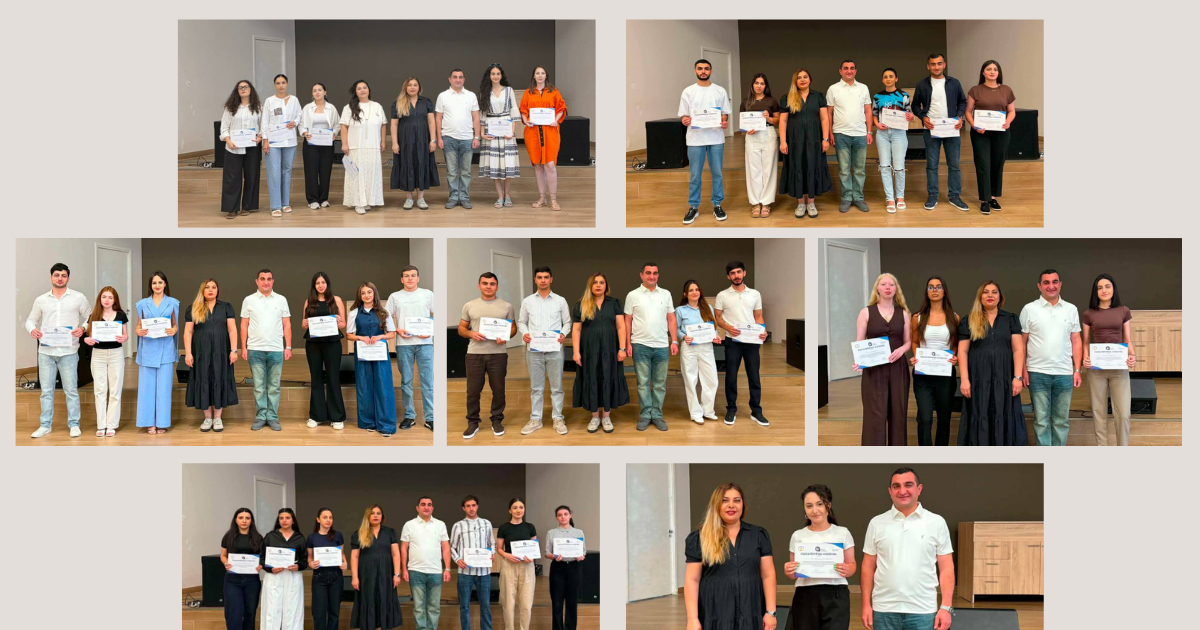
Upon completion of the summer school, participants were awarded certificates of participation.
The initiative further underscored the vital importance of collaboration between higher education institutions and research centers in building the capacities of young specialists, disseminating scholarly knowledge, and driving expert dialogue on Armenia’s foreign policy and strategic communication.